
We may be getting close

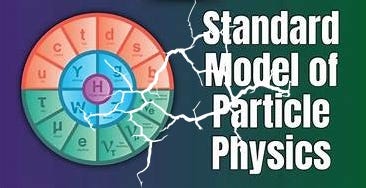
For the last 50 years, physics has developed something called the “Standard Model” as the best explanation of how our universe works. In a nutshell, the Standard Model is a comprehensive framework that describes the fundamental particles and forces in the universe, excluding gravity. It classifies all known elementary particles, including quarks, leptons (like electrons and neutrinos), and gauge bosons (force carriers), and it explains three of the four fundamental forces: electromagnetic, weak, and strong interactions (just not gravity).
The Standard Model incorporates the discoveries made in quantum mechanics, combining it with special relativity to describe particle interactions and forces at the subatomic level. It represents a collection of quantum field theories that use quantum mechanical principles to explain how elementary particles behave and interact through the exchange of force-carrying particles called bosons.
And for the past 50 years, it has been severely tested through numerous experiments and has successfully predicted various phenomena. The discovery of the Higgs Boson in 2012 was a key piece of experiential evidence needed to validate it.
And it’s fair to say that throughout the 50 years of testing and experimentation, no cracks have appeared in the Model. It has performed magnificently in all of its predictions.
However, while it is a robust theory, the Standard Model does not incorporate gravity, which is described by general relativity, nor does it explain dark matter or dark energy. So many physicists have not been totally satisfied.
Now, a real crack in the Model has appeared, leading to news headlines about a “new physics” on the horizon. “Recent findings from research at the Large Hadron Collider (LHC) at Cern in Geneva suggest that we might be closing in on signs of undiscovered physics,”[1] and Scientists at CERN have just observed an astoundingly rare phenomenon at the subatomic level that could lead to a new understanding of the standard model of particle physics.”[2]
Here’s what happened, according to excepts from an article published on Phys.org on April 20, 2026….
“In the Large Hadron Collider (LHC), beams of proton particles traveling in opposite directions are made to collide, in a bid to uncover hints of undiscovered physics. The result comes from studying the decay—a kind of transformation—of sub-atomic particles called B mesons. The experiments investigated how these B mesons decay into other particles, finding that the particular way in which this happens disagrees with the predictions of the Standard Model.
“The measurement, accepted for publication in Physical Review Letters, shows a tension of four standard deviations from the expectations of the Standard Model. In real world terms, this means that, after considering the uncertainties from the experimental results and from the theory predictions, there is only a one in 16,000 chance that a random fluctuation in the data this extreme would occur if the Standard Model is correct.
“Although this falls short of science’s gold standard—what’s known as five sigma, or five standard deviations (about a one in 1.7 million chance)—the evidence is starting to mount. Adding to this compelling narrative are results from an independent LHC experiment, CMS, that were published earlier in 2025.[3] Although the CMS results are not as precise as those from LHCb, they agree well, strengthening the case. (Precise investigations of decays like this are one of the primary goals of the LHCb experiment and have been since its inception in 1994.)
“Open theoretical questions remain that prevent anyone from definitively claiming that physics beyond the Standard Model has been observed. The most serious question arises from so-called “charming penguins,” a set of processes present in the Standard Model, whose contributions are extremely tricky to predict. Recent estimates of these charming penguins suggest their effects are not large enough to explain our data.
“Furthermore, a combination of a theory model and experimental data from LHCb suggests that the charming penguins (and therefore, the Standard Model) struggle to explain the anomalous results.
“Further advances are planned for the 2030s to exploit future upgrades to the LHC and accrue a dataset 15 times larger. This ultimate step will allow definitive claims to be made, potentially unlocking a new understanding of how the universe works at the most elementary level.”[4]
“If we measure a deviation from the [standard model], it’s a clear sign of new physics,” said Cristina Lazzeroni, a particle physicist at the University of Birmingham.[5]
What would happen if the Standard Model was found to be inaccurate? Well, the world is not going to end, but for me it would be like a John Grisham courtroom drama where the prosecution’s case suddenly falls apart with new evidence, and everyone rushes around to replace it with a new theory. At a minimum, the door would be open to consider other Models, such as the Holographic Principle, and researchers would stop spending all their time and effort and money trying to prove the accused is guilty and start looking at different possibilities.
Don’t get me wrong…. I’m not an expert in physics by any stretch of the imagination. I have absolutely no idea whether a Holographic Model would arrive at a prediction that would align with the actual decay of B mesons into other particles. I DO think that it would not be necessary to throw the baby out with the bathwater—that a Holographic Model would have to explain and predict the four fundamental forces (including gravity) at least as well as the Standard Model has done, and either prove the existence of dark matter and dark energy or propose a better explanation for the Big Bang/Inflation scenario.
If this topic interests you, you might want to take 10 minutes to watch a YouTube Video about a new theory from Aalto University that proposes a new bold model to unify all four fundamental forces (including gravity)—if for no other reason than to get an example of the out-of-the-box thinking required when the Standard Model inevitably develops more cracks.
[1] https://phys.org/news/2026-04-lhc-decay-anomaly-reveals-standard.html
[2] https://au.news.yahoo.com/something-wild-just-happened-cern-130555884.html
[3] Id.
[5] Yahoo News, Ibid.